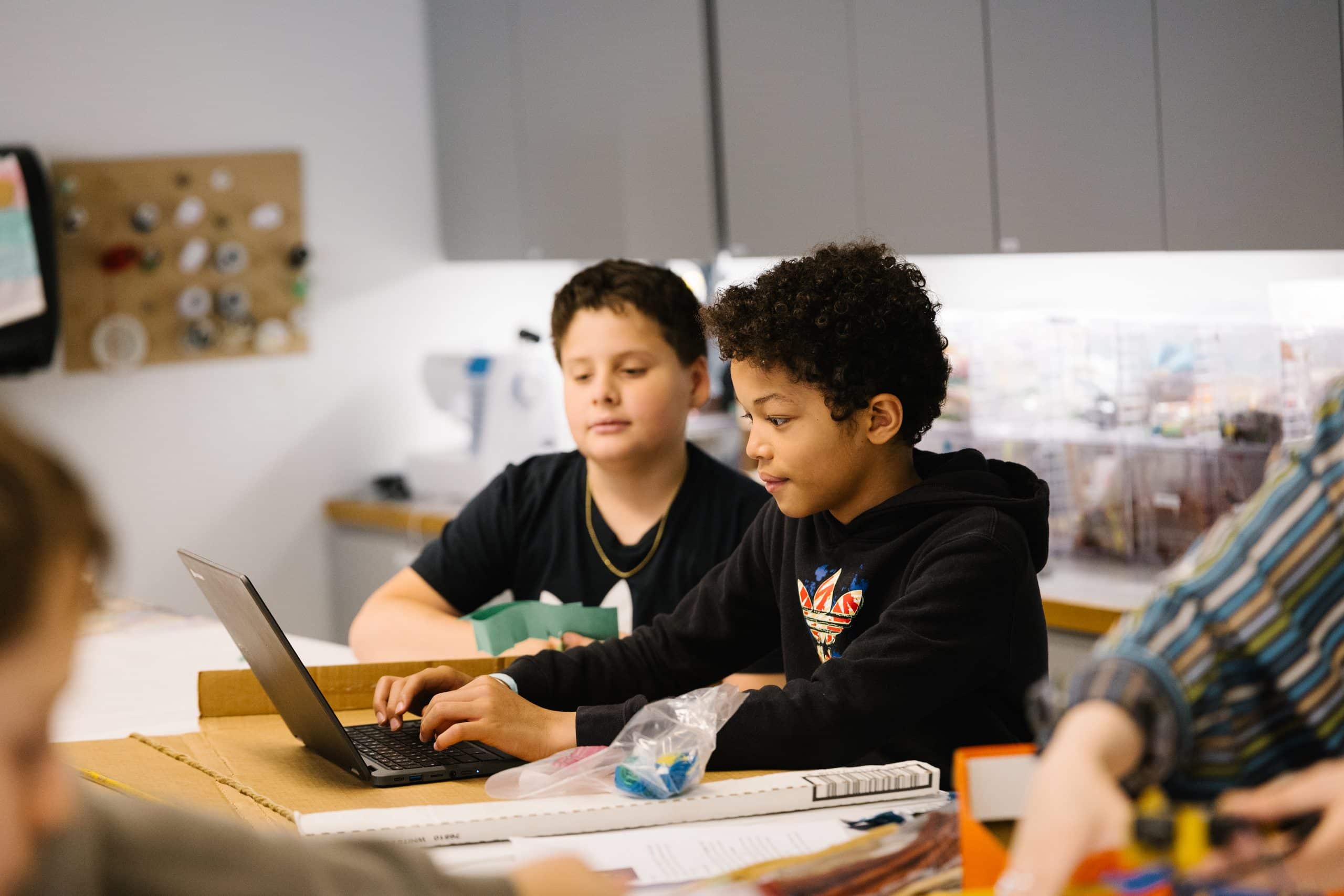
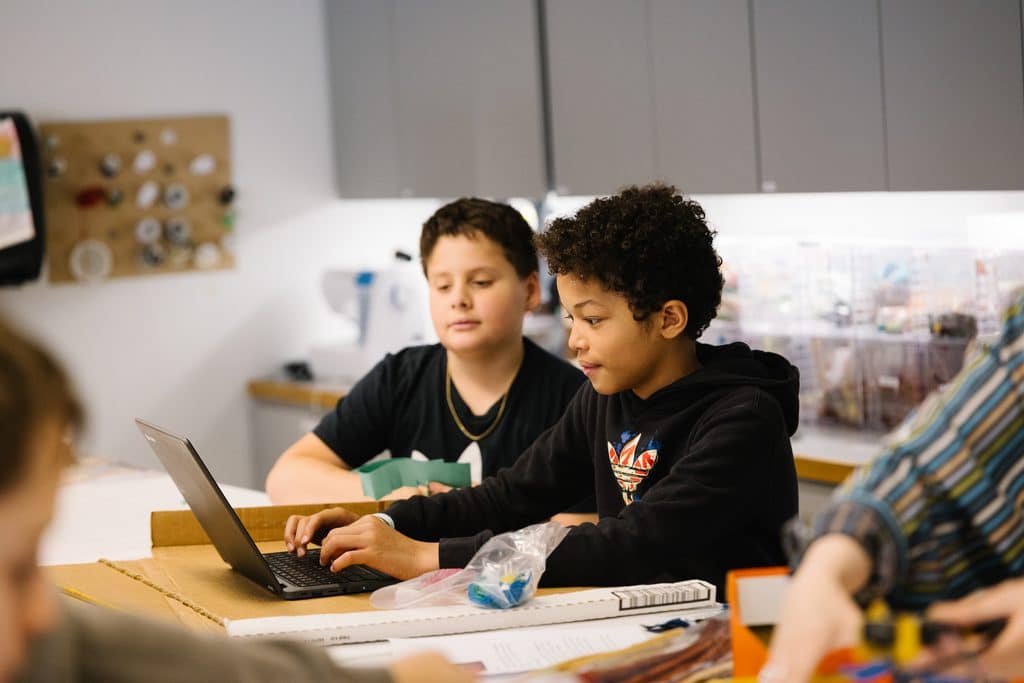
Every parent reaches a moment when they realize their child is changing. Maybe it’s the first time they insist on doing something by themselves. Maybe they begin asking bigger questions, navigating more complicated friendships, or taking ownership of responsibilities that once required constant reminders. The changes aren’t always dramatic, but they’re unmistakable. Childhood begins giving way to something new.
For many Stephen Gaynor School families, that moment coincides with the transition into Intermediate Division. At first glance, it can seem like simply the next step from one division to another. In reality, it marks one of the most significant developmental shifts in a child’s life. Academic expectations evolve, friendships become more complex, executive functioning demands increase, and students begin seeking greater independence, often before they fully have the skills to manage it on their own.
That is exactly why the Intermediate Division exists as it does. One of the most meaningful forms of education happens quietly. It is found in anticipating what children will need before they know they need it themselves and thoughtfully preparing them for the challenges and opportunities that lie ahead.
“When I became Director of the Intermediate Division, I could clearly see how intentionally our program is built to prepare Gaynor graduates for their next steps,” says Rebecca Felt, Director of Intermediate Division. “Our teachers are experts at taking increasingly complex material and breaking it down to meet students where they are. Intermediate Division students are ready to engage in higher-level academic content, and I love that we have these two years to strengthen their skills while continuing to cultivate a love of learning.”
That intentionality shapes every aspect of the Intermediate Division experience. Students are no longer focused solely on learning foundational skills. They begin applying those skills in increasingly sophisticated ways. They think more deeply about their own learning, developing the self-awareness to understand not only their strengths and challenges but also which strategies help them succeed. As lessons become more complex, teachers continue reinforcing foundational skills while helping students transfer those skills across subjects and into new situations.
The same thoughtful progression happens beyond academics. “The transition is not about expecting students to suddenly become independent,” says Assistant Head of School Jill Thompson. “It is about intentionally teaching them how to become independent.” That philosophy shapes everything from classroom instruction to the experiences students have throughout the school day.
Teachers gradually shift from directing students toward coaching them. Executive functioning strategies become opportunities for students to plan, organize, reflect, and advocate for themselves. Through guided practice and individualized support, students begin taking greater ownership of both their learning and their decision-making while always knowing trusted adults remain close by.
Growth happens outside the classroom as well. An overnight trip becomes more than time away from home. Students learn resilience as they navigate new experiences, strengthen friendships, solve problems together, and discover they are capable of more than they imagined.
Athletics become opportunities to develop leadership, teamwork, perseverance, and confidence. Collaborative projects encourage flexibility, communication, and shared responsibility while helping students learn from one another.
Growth extends beyond academics as well. Through daily opportunities for reflection, executive functioning instruction, restorative practices, and social-emotional learning, students develop the self-awareness to understand their emotions, repair relationships, advocate for themselves, and make thoughtful decisions. These experiences help students build the confidence and resilience that will serve them well beyond Gaynor.
“The Intermediate Division is a critical bridge between childhood and adolescence because developmental demands accelerate, often more quickly than a child’s executive functioning, language, and self-regulation skills,” Jill explains. “Students want greater independence while still needing thoughtful coaching, structure, and support.”
For students with language-based learning differences or ADHD, that developmental gap can be even more pronounced. Rather than waiting for students to struggle, Gaynor anticipates what is coming. Faculty intentionally adjust support over time, gradually releasing responsibility while continuing to provide individualized coaching and encouragement. Students aren’t simply asked to become more independent—they are shown how.
Parents often notice another important shift during these years: relationships begin to change. “Children crave opportunities to feel independent and connected,” Rebecca says. “Small opportunities for responsibility and autonomy positively impact a child’s sense of self-efficacy and self-esteem.”
Friendships become less defined by classrooms and more by shared interests. Students begin exploring who they are while learning to navigate increasingly complex social situations. Even as peers become more influential, trusted adults remain an essential source of reassurance, guidance, and perspective. That balance—encouraging independence while remaining deeply supportive—is what makes these years so transformative.
By the time students leave the Intermediate Division, they haven’t simply completed another stage of school. They have begun to understand themselves as learners, advocates, teammates, ensemble members, and increasingly confident young people. They carry with them not only stronger academic skills, but also the strategies, resilience, and self-awareness to navigate whatever comes next.
Service can take many forms. Sometimes it is a meal prepared for a family in need, a community coming together after a crisis, or an alumnus returning to mentor the next generation. Sometimes it is found in expanding access to children who deserve a specialized education or creating spaces where every member of a community feels they belong.
And sometimes service is quieter than that. Sometimes it is found in a teacher who knows when to step in, when to step back, and how to prepare a child for challenges they have not yet encountered. It is found in a school that understands not only where its students are today, but where they are headed tomorrow.
That is the work of the Intermediate Division. It is not simply preparing students for the Upper Division. It is preparing them for life beyond Gaynor.