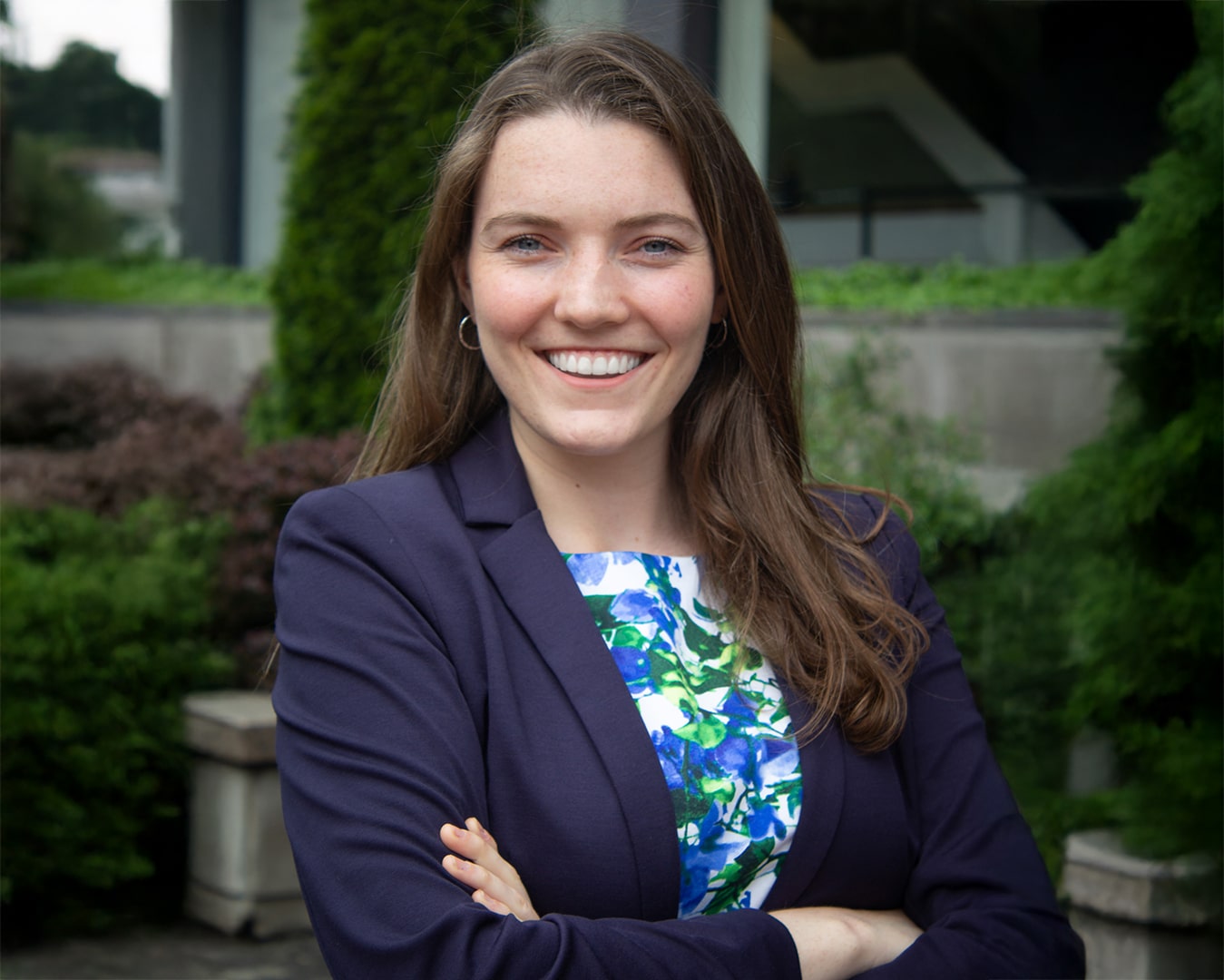
For Sarah Braverman ’09, Stephen Gaynor School was more than a school. It was the place where she learned that being different did not mean falling behind and where, for the first time, she felt fully seen.
When Sarah arrived at Gaynor in sixth grade, she was quiet, shy, and uncertain. School had not always felt like a place where she could fully be herself. As a student with dyslexia, reading aloud felt intimidating, and academic challenges often carried a quiet sense of self-doubt. But at Gaynor, something shifted.
“I felt respected,” Sarah said. “I felt very much like it was a safe space to be myself.” Looking back, she laughs at how quickly the change took hold. The student who arrived quietly would soon feel confident enough to speak up, take risks, and trust that she belonged.
“The way you experience the education system really impacts who you are as a person,” she reflected during a recent alumni panel discussion. Before Gaynor, school often felt intimidating, especially as a student with dyslexia. Reading aloud in front of classmates was one of her greatest fears, and like many students with language-based learning differences, she worried about keeping up. At Gaynor, however, she found something different: a community that understood her.
One memory stands out in particular. Reading aloud had once felt terrifying, but at Gaynor, when she stumbled over words, no one laughed. Instead, teachers and classmates listened, encouraged, and helped build confidence through practice.
“The teachers actually cared and wanted to see me succeed,” she said. “My classmates wanted to see me succeed.” That experience transformed how Sarah saw herself as a learner. “Gaynor really taught me that I was actually normal,” she reflected.
Just as important, Gaynor gave her practical tools that stayed with her long after graduation. Sarah learned reading strategies, study habits, and how to understand what worked best for her brain. She also learned something that would shape every chapter of her academic life: self-advocacy. “I learned study methods that work for my brain,” she said. “Being an advocate for myself when it comes to testing, that really began here.”
After Gaynor, Sarah attended Tenafly High School in New Jersey, where she quickly realized how much Gaynor had prepared her. Rather than feeling intimidated, she entered high school with confidence and a clear understanding of what she needed to succeed.
That confidence followed her through college and graduate school. Sarah studied environmental science at Mount Holyoke College before earning a master’s degree in public administration focused on climate and environmental policy at Columbia University. Today, she works as a consultant helping Fortune 500 companies manage carbon emissions and move toward net-zero goals.
At Columbia, the self-advocacy skills she developed at Gaynor were second nature. “I went in and said, ‘Hi, professors at Columbia, I’m going to need double time on my exams because I’m dyslexic,’” she recalled with a laugh. “They said, ‘Okay, can we see your IEP?’ It’s already here on the table.”
Along the way, Sarah challenged assumptions about what dyslexia could mean. In high school, she enrolled in AP English, eventually making English one of her favorite subjects. “People are like, ‘But don’t you have dyslexia? Isn’t that hard?’” she said. “Yeah, of course it’s hard, but I love it.”
When Sarah reflects on what made Gaynor special, she returns to the people. “The teachers here are absolutely brilliant,” she said. “The most dedicated, patient teachers your kids will ever have.” She remembers feeling deeply cared for by teachers and specialists who invested in her growth and believed in her potential. She also credits her family, especially her mother, for modeling self-advocacy. “My mom is my greatest advocate,” she said, before adding with humor, “And I thank my dad for my dyslexic brain.”
Looking back, Sarah knows exactly what she would tell the quiet sixth grader who first walked through Gaynor’s doors: “School is not a scary place. This is a safe place to be. Everybody is rooting for you.”
For Sarah, that feeling of being seen, supported, and understood changed everything. It gave her the confidence to advocate for herself, embrace challenges, and move through the world believing she belonged.