
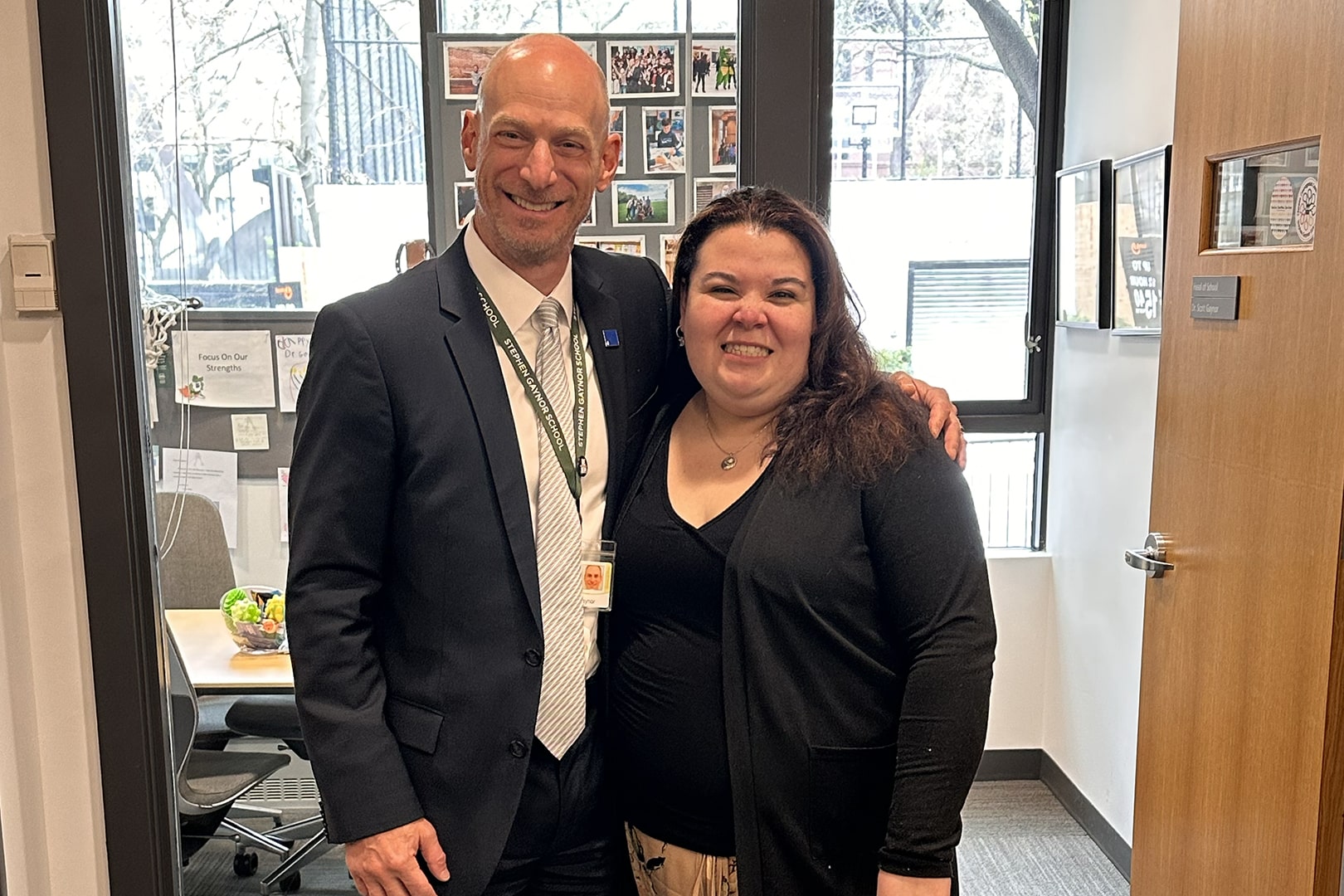
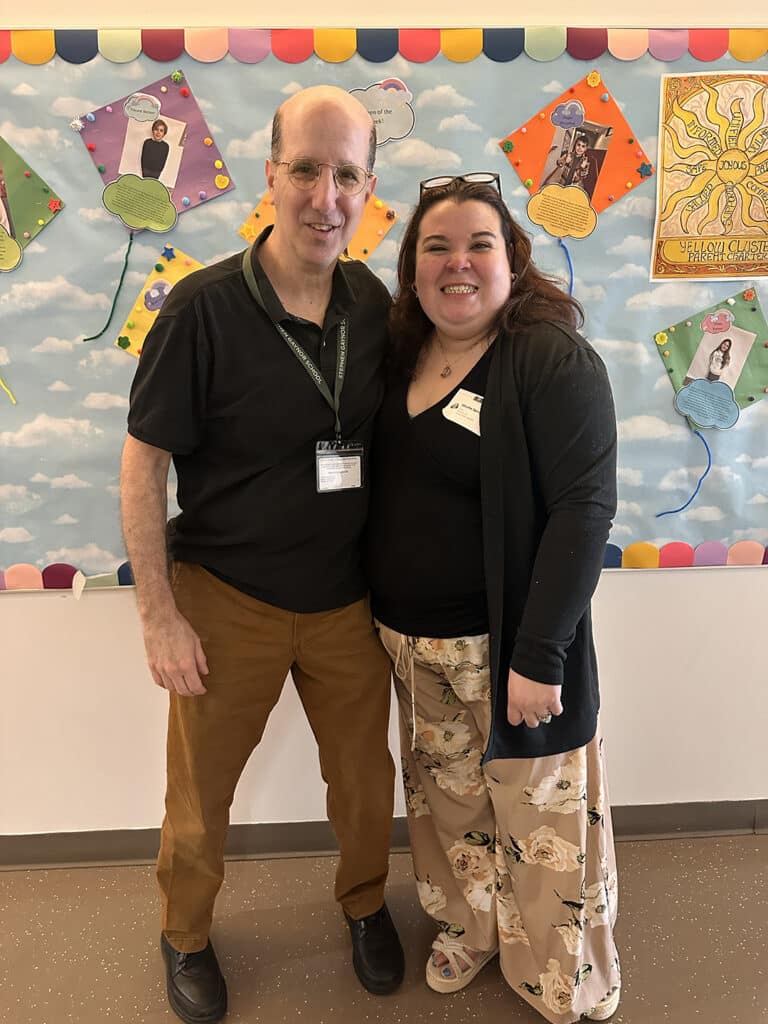
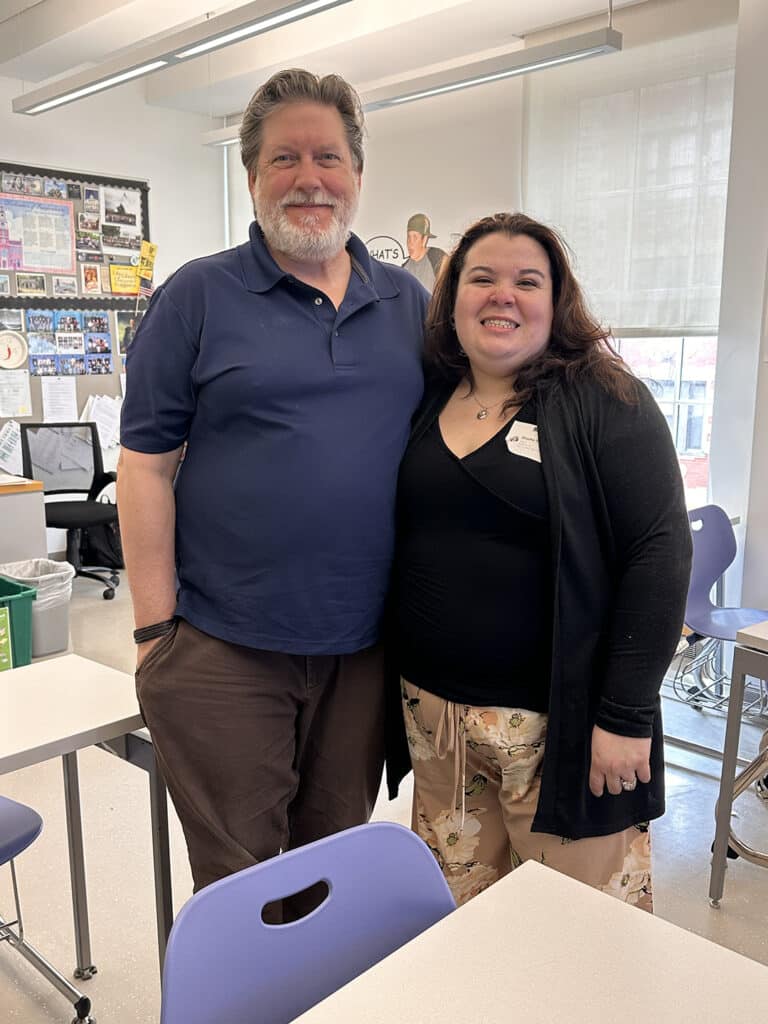
When Shosha Spivack ’01 walked back into Stephen Gaynor School this spring, she wasn’t just revisiting a place from her childhood. She had returned while completing her master’s degree in early childhood education, conducting research for a graduate thesis on Art and the Impact It Has on Children 6 to 16 Who Struggle with Behavioral Difficulties. But she was also returning to something more personal: a way of thinking that, years later, still shapes how she learns, works, and moves through the world.
Not long before her visit, she had been facing a familiar obstacle. A required biology course. No lectures. No real instruction. Just reading, questions, and the expectation that she would figure it out on her own.
The first time, she couldn’t. “I failed,” she said plainly. “I didn’t get it. I didn’t care. I was just going to fail.” The second time, she paused and recalibrated. Instead of pushing through the way she had been taught elsewhere, she reached back to something older and more instinctive.
“I had to go Gaynor-style,” she said.
It meant slowing down. Writing questions before reading. Breaking concepts into pieces. Creating a structure where none existed. It meant trusting a process she first learned as a child. “I took out everything. My flashcards, my notebooks, whatever I needed,” she said. “Everything that Gaynor gave me.”
This time, it worked.
Before Gaynor, school had looked very different. Shosha remembers classrooms where she struggled to keep pace and teachers who, by her account, did not have the tools or time to support her learning differences. She recalls feeling singled out, confused, and bullied.
In the classroom, the challenges were just as stark. “I couldn’t tell time. I couldn’t do math. I didn’t know how to read,” she said. Support was inconsistent, and when she tried to explain what she was experiencing, she often felt dismissed. “Try telling that to your parents and they look at you like you’re full of stories,” she said.
When her parents enrolled her at Gaynor at age seven, the change was immediate and, in some ways, disorienting. The school was housed in a brownstone on West 74th Street. It was small, tightly knit, and unlike anything she had experienced before. Students moved through narrow hallways. Teachers knew not just their names, but their patterns, their frustrations, and their strengths.
What stood out most was not the setting, but the attention. “At Gaynor, it was home,” she said. For the first time, she felt safe. “I wasn’t teased here. I wasn’t bullied,” she said. “It just became home.”
Teachers paid close attention to how she approached learning. They knew when she was avoiding something and when she genuinely needed help. “They knew when you were playing the game and when you were being serious,” she said. That level of understanding changed how she saw herself. The shift was both academic and psychological. Within weeks, she began to build skills that had previously felt out of reach. She learned to tell time. She started to read. Math, once inaccessible, became something she could begin to understand.
“I learned everything here,” she said. “I learned how to read. I learned to do math.” Just as important were the tools she developed along the way. One, in particular, has remained constant. Before reading, she writes down what she is looking for. Questions. Points of focus. A framework. Then she reads with purpose.
It is the same approach that helped her return to that biology course and approach it differently the second time. “This time I’m going in Gaynor-ready,” she said.
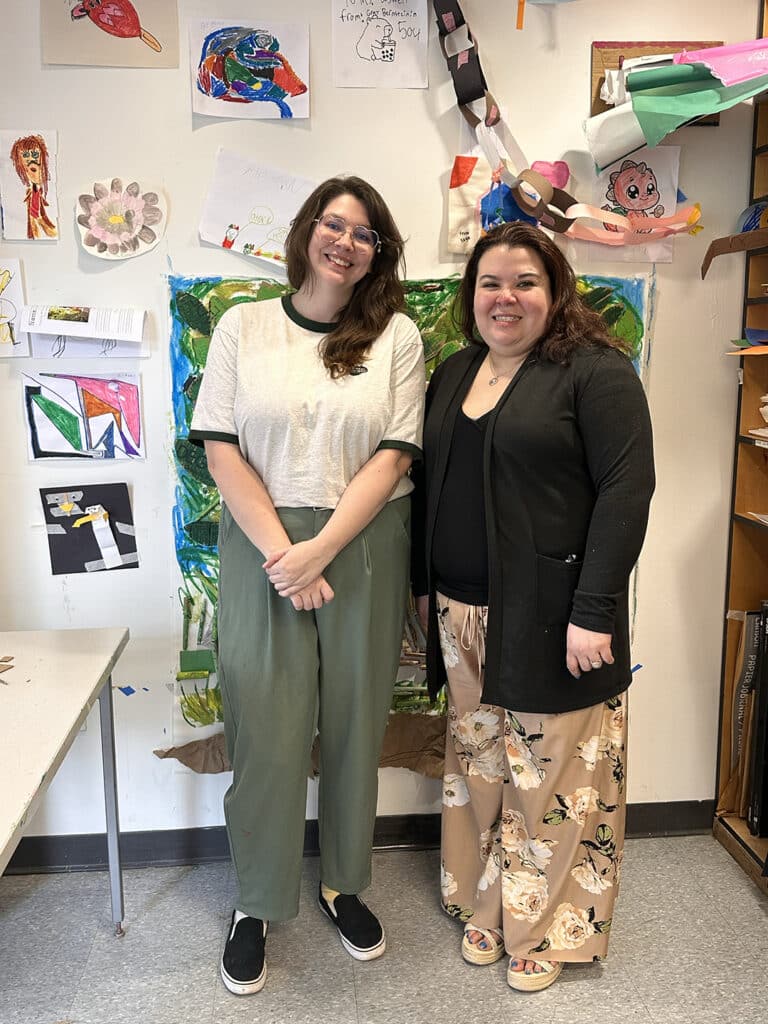
There were also parts of the day that offered something less structured, but no less important. Art class became a space where she could step outside the demands of reading and math. It was a place where she could focus without pressure and create on her own terms.
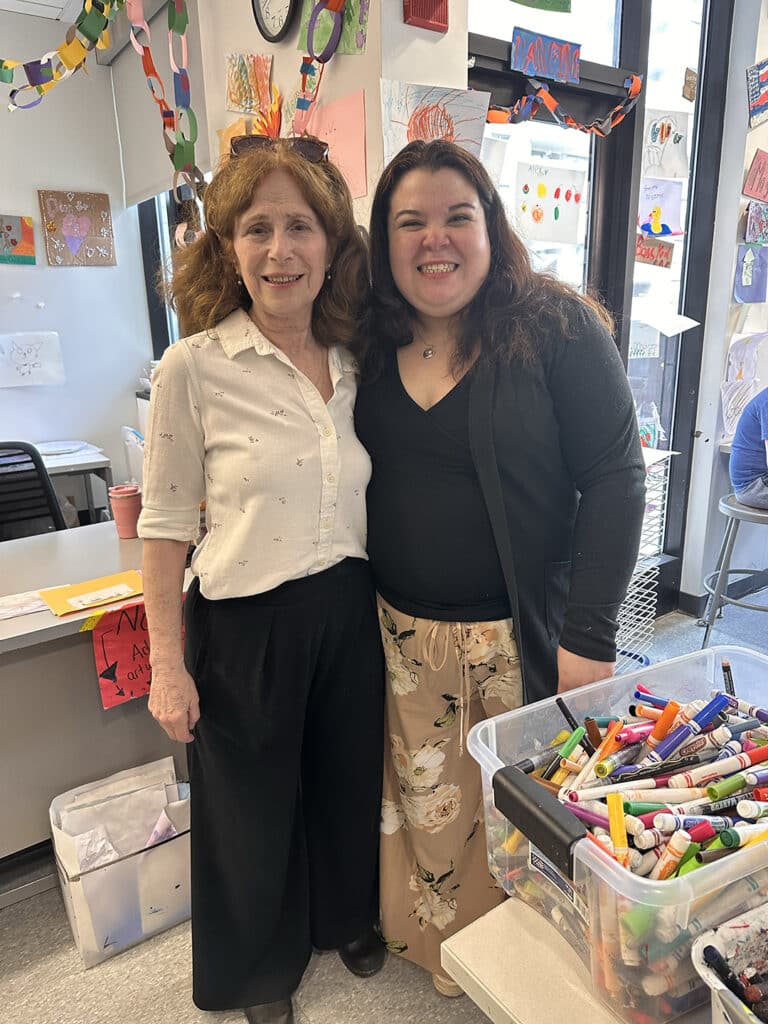
“I could escape,” she said. Her teacher, Ruth Rachlin, who still teaches at Gaynor today, recognized something in her early on. “She saw it in me in a way that I didn’t see it,” Shosha said. That recognition mattered. It gave her confidence in a space where she didn’t have to struggle to keep up, where she could simply be capable.
That experience stayed with her. Today, as she completes her master’s degree in early childhood education, her graduate thesis focuses on the role of art in supporting children ages 6 to 16 with behavioral challenges, a connection that traces directly back to those early moments in Ms. Rachlin’s classroom and one of the reasons she returned to Gaynor this spring. After graduating from Gaynor in 2001, Shosha carried these experiences forward. She went on to build a career in education, teaching young children for nearly two decades. In her own classroom, she found herself replicating what had worked for her.
“The way I taught was the way I was taught,” she said. She broke concepts down into steps. She paid attention to how her students learned. She gave them tools they could use beyond the classroom. “I was able to teach the way I learned here,” she said. “It was the easiest way to break things down.” Over time, she began to see the same transformation in her students. “I can’t tell you how many success stories I have,” she said. “Parents are still in touch with me.”
Now, as she prepares to graduate with her master’s degree, Shosha is thinking about what comes next. For students with learning differences and families wondering what is possible, she hopes her story offers something simple but powerful: proof that the tools learned early can last a lifetime. She hopes to write children’s books that reflect the experiences of students with learning differences. Stories that offer recognition and reassurance. “There’s not enough out there,” she said. “Kids need to know someone else understands.”
Walking through Gaynor today, the physical space is almost unrecognizable from the brownstone she once knew. The school has grown. The scale is different. But the core, she said, feels the same. “This was my foundation,” she said.
Years later, when she encounters something difficult, she knows what to do. “Everything goes back to Gaynor.”